When the au pair scheme came into effect in Denmark in 1972, its purpose was to give internationals between the ages of 18 and 30 the opportunity to get to know Danish culture by living with a local host family.
During their stay, the au pairs are required to perform simple tasks such as childcare and housework for no more than 30 hours per week, while also enrolling in Danish language courses. In return, they receive 4,700 DKK ‘pocket money’ in addition to lodging and food.
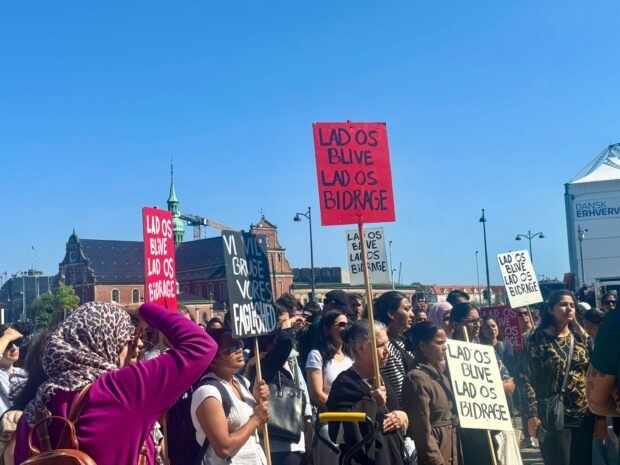
On 6 August, the trade union FOA, part of the Au Pair Network which works to protect au pairs’ rights, issued a press release detailing the ‘gross exploitation’ of au pairs in Denmark, and demanding a revision to the current scheme.
The union proposed a number of changes, such as abolishing the maximum residence period of two years, the requirement for au pairs to live with their hosts, and compulsory Danish classes. The scheme should also be open to non-EU and EU citizens on equal terms.
Let’s call it what it is!
“Both the host family and the au pair tend to see it as a working relationship rather than an opportunity for cultural exchange,” Ruben Holmgreen Falk, general manager of Kirkernes Integrations Tjeneste, another member of Au Pair Network, tells The Copenhagen Post.
But this is not always the case. An au pair from Italy, who has been living with a Danish family for ten months and who requested to remain anonymous, said: “although it might sound too ambitious, I was kind of expecting to find a second family here.”
To her disappointment, spending time with their international guest was not her hosts’ intention. “I feel like they only wanted me here to work. Once, I was playing with their kid during my free time, and they told me to just go and do my own thing. We rarely spend time together now.”
Overworking and Denmark’s au pair blacklist
While this lack of family integration can be a letdown, many au pairs are confronted with more serious problems – including underpayment, overwork, and psychological as well as physical abuse.
Over the past five years, 238 violations of the Danish au pair scheme were reported to FOA. As a result, 35 hosts in Denmark have been issued with a two-year ban on fostering au pairs, Politiken reports.
Our source describes overworking as commonplace in her role under the current au pair scheme: “my host family often charges me with way too many tasks that only a professional cleaner could handle in that short amount of time. If I don’t manage to do everything, I usually have to work overtime.”
Further issues include not being paid on time and receiving her schedule on short notice, making it difficult to plan free time.
Recognise au pairs under labour law
Revising the scheme is crucial in protecting au pairs, who find themselves in a very vulnerable position, says Falk. He argues further that au pairs should be safeguarded by Danish labour laws.
Pia Heidi Nielsen, chair of the Food and Service Sector at FOA, agrees that recognising au pair work under the labour law is the solution:
“We know that the work is in demand and that the work will be done. We risk seeing more undeclared work – especially childcare and cleaning – if the scheme is simply abolished. Without a scheme, there is no protection for au pairs. When it comes to real paid work, you must also have decent pay and working conditions, otherwise it is social dumping of foreign women.”
No agency over rights and residency
Currently, the host family is in possession of the au pair’s work and residence permit – meaning that if the agreement is terminated, the au pair loses their residency status.
Furthermore, cultural barriers between the host family and the au pair often cause difficulties. “In Denmark, it is very common to speak out for your rights as an employee, but as someone coming from a completely different culture where the focus is often on loyalty towards the employer, it can be hard to speak up for your rights,” Falk says.
As well as the proposal to abolish the requirement for co-living between au pair and host, the FOA writes that to prevent deportation ‘the worker themself must be in possession of a work and residence permit’.
No more cultural exchange?
One could argue that by abolishing co-living requirements and mandatory Danish lessons, the scheme moves even further from the promise of cultural exchange.
The au pair from Italy has a different outlook: “a fair salary will not dissuade you from establishing a relationship with your host family. When I worked as a babysitter previously, I felt part of the family, even though I was living on my own and was paid like a regular employee.”