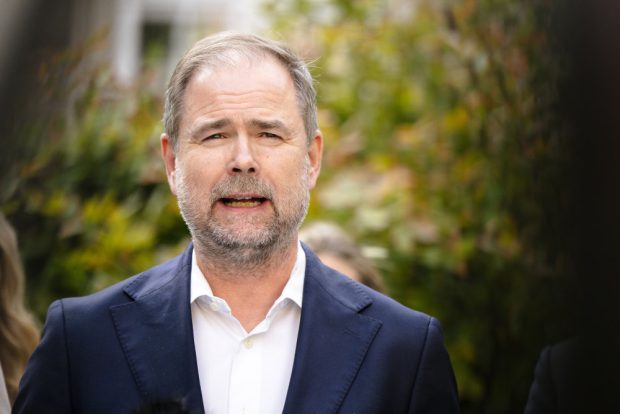
Fresh from a seven-day trip to China, Kenya and Skrydstrup, Foreign Minister Lars Løkke Rasmussen voiced that Denmark ‘needs more friends’, and would benefit from labor from ‘select partner countries’ in Africa, according to Berlingske.
The dearth of international students and workers in Denmark has been identified by the government as one of its most pressing concerns.
Løkke’s words are the first intimation of what Denmark’s expanded foreign labour strategy might focus on.
More Africans working and studying in Denmark
“It is important that we do not just say Africa, because that includes countries such as Somalia, Sudan and Niger that have just been subjected to a military coup. But Africa is also Kenya, which has two official languages, one of which is English, and a democracy which is fragile but which they cherish,” said Løkke, according to TV2.
At the government’s press conference on Thursday, the Prime Minister Mette Frederkisen was asked whether she shares the foreign minister’s position.
Frederiksen confirmed that attracting foreign labor is part of the government’s ‘combined economic policy and labor market policy’, but emphasized that Denmark currently has no concrete plans for new partner countries.
‘Full of conflict’
The subject of attracting African labour to Denmark is divisive in Danish media and in parliament.
Løkke describes the conversation as ‘full of conflict’, while TV2 dubs it ‘the Africa issue’.
But the leader of Radikale Venstre Martin Lidegaard calls Løkke’s announcement ‘exciting’ and says he hopes the Moderaterne chairman is speaking on behalf of the government:
“We need more labor in Denmark, and I warmly support the idea of creating a more structured collaboration with countries outside Europe. Most European countries have this problem, and that is why we have to go outside the EU,” said Lidegaard, according to TV2.
He points to the benefits of attracting an African workforce:
“There are far more well-educated young people in Africa. Yes, there are fragile states with chaos and poverty, but there are also well-ordered countries like Kenya and Uganda, where young people dream of working or studying.”
The immigration policy is ‘sailing’
Meanwhile, Danske Folkeparti takes the opposite stance.
Party chairman Morten Messerschmidt points out that there are already many Danes – specifically seniors and more than 100,000 disabled people – trying in vain to enter the labour market.
The foreign ministers’ announcement is a sign of a ‘sailing’ (slang for flailing) immigration policy, he asserts, according to TV2: “We do not want more people from Africa or the Middle East at all. We should send a few more back instead of taking them in.”
Dansk Demokraterne: Look to Southern Europe instead
And Dansk Demokraterne question why Løkke is ‘flying around down in Africa’ and ‘shopping people for Denmark’.
“It is better that Danish companies focus on other European countries with high youth unemployment,” says Dansk Demokraterne’s Hans Kristian Skibby, noting that Spain, Italy and Portugal are good alternatives.
“But to go headhunting in Central Africa, where relatively few people have a higher education, we think is ill-conceived,” said Skibby.