People in Denmark start planning for their pensions early – when they graduate and start to work full-time.
Due to a well-grown pension scheme, you start saving for retirement as part of your salary package. Thus, the state provides most Danes with many options for choosing a suitable retirement plan.
This aspect of life in Denmark generally surprises expats from countries where only former state employees or their spouses are entitled to pensions, or saving for retirement is a luxury that most can’t afford.
In many cases, earning young adults living abroad is the only pension plan for their elderly parents back home.
While in Denmark, people are raised to be independent individuals who are financially sound in their old age. Signing up for a pension plan suitable for your work is easy and available to all residents. You pay for your pension, while the government and employers also contribute.
Age for retirement will go up
The Danish pension system is designed in a way that one can receive a pension from multiple sources. This means that people receive a state pension once they reach the pension age, which varies depending on your age. Currently, the pension age is 67 years, but it will be higher in the future.
Every Dane gets a state-funded pension upon retirement, adding to the labour market pension made out of saving throughout their entire working career. There’s another possibility of an individual pension, but it’s mostly common in Danes who own businesses.
State Pension provides a regular income
The government pays it to Danish citizens who have reached the pension age. It’s called ‘Folkepension’ in Danish. Under this system, the money you receive after leaving the workforce depends on your age, work status, marital status, where you currently reside, and where you have lived.
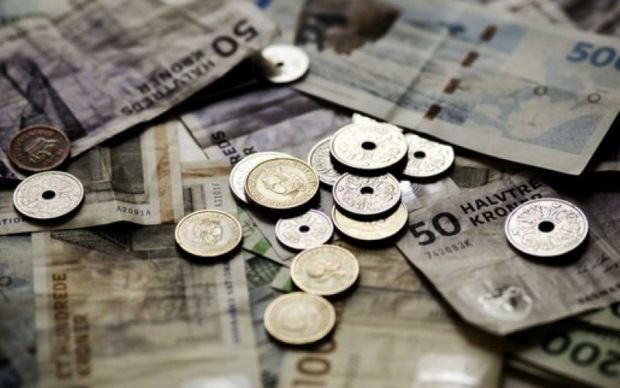
The basic amount is DKK 6,694. There is also a pension supplement that can cover some expenses, such as heating costs, dental care, and medicine. It varies between DKK 3,963 to 7,745, depending on your marital status.
Citizens of another EU/EEA country, Switzerland, or the United Kingdom and refugees can also receive a statutory pension if they meet certain criteria.
The state also provides the right to a disability pension if you are over 40 and unable to work full-time or part-time.
Labour pension is you get what you paid
The Danish Labour Market Supplementary Pension, or Arbejdsmarkedets Tillaegspension or ATP, is a collective pension available to all wage earners in Denmark. ATP provides a lifelong pension after you leave the workforce and reach the pension age.
Contributions made by the individual determine this pension’s amount. This means the more a person works in Denmark, the more their retirement is delayed and the more money they will receive.
The contributions made to ATP are mandatory for employees that work more than 9 hours a week and are aged between 16 to 65.
In many cases, employers also contribute to this pension. While the terms are agreed upon directly with the employee or in the collective agreement. Usually, two-thirds is paid by the employer and one-third by the employee.
A lifeline for blue-collar workers
Almost 85% of the employed workforce in Denmark is covered by this pension scheme.
The unique feature of the labour pension is that it covers blue-collar workers. In many parts of the world, such workers earn daily without a defined retirement age or funds to support themselves after leaving the labour force.
Under this pension plan, all public sector employees are enrolled in a collectively agreed-upon defined contribution plan, although it offers fewer benefits to private sector employees.
Occupational pension plans typically offer a range of benefits, including disability, survivors’, old-age, and critical illness benefits, while covering many societal risks. While other benefits are insurance benefits financed from the worker’s current payment, old-age benefits are insurance benefits that are fully funded.
If one dies, to savings go to the next of kin.
Individual pension most suitable for self-employed
People in Denmark can also set up an individual saving scheme through a back or a pension company. This can also be added as a supplement to ATP.
This system allows self-employed freelancers or business owners to receive a pension after retirement.
Business owners can invest up to 30% of their annual profits in an individual pension plan while receiving a full tax deduction for their contributions. The drawback is that you can never be sure how much money your company will make in the end, so it’s a good idea to have alternative pension funds.
If you retire early, you can contribute to A-kasse, an unemployment insurance fund. Additionally, you can work for yourself while earning your early retirement pension if you want to do so later.