On 29 August, the leader of Moderaterne Lars Løkke Rasmussen proposed a new ‘fast-track’ work permit for skilled internationals seeking employment in Denmark.
He explained that the initiative, which would be available at companies with trade union agreements, would help businesses to hire foreign talents more quickly, without waiting for permits to be cleared by immigration services.
The idea was welcomed by the chairman of Denmark’s largest trade union 3F, Henning Overgaard, who said “I have been vocal about this for a very long time.”
The proposal is yet to be approved by the Socialdemokratiet government, but Løkke is hopeful: “This should speak directly to the heart of a good Social Democrat. It is a boost to the Danish trade union movement at a time when it is difficult to make the trade union movement attractive,” he said.
A closer look at the fast-track
But why, beyond Løkke’s simple explanation, is this initiative a good thing for international job applicants and Danish businesses?
Moderaterne’s deputy chairman Mohammad Rona calls the fast-track ‘a necessary step if we want to continue to uphold a high standard in the Danish labour market’, but cautions that new arrivals need to ‘be at a Danish level of expertise’.
He says Denmark needs 90-100,000 skilled workers, across industries, to stay competitive.
“We need these people by 2030. This is a late warning. This proposal can get people in right now, and we need that,” he says.
“Many of the people coming today are from Romania, Germany, Poland, Australia and the US. Everybody needs more workers – we are in high competition with other countries.”
Would the fast-track solve the common problem of foreign qualifications not being recognised in Denmark? “It’s something we’d have to look into,” says Rona.
Can Denmark handle 90-100,000 new internationals?
Denmark has a troubled recent history when it comes to welcoming international migrants.
In 2021, a collaborative study by universities in Malmö, Lund, Maastricht and Florence found that Denmark drastically underperforms in naturalizing immigrants up to 21 years after migration, compared with Sweden and the Netherlands.’
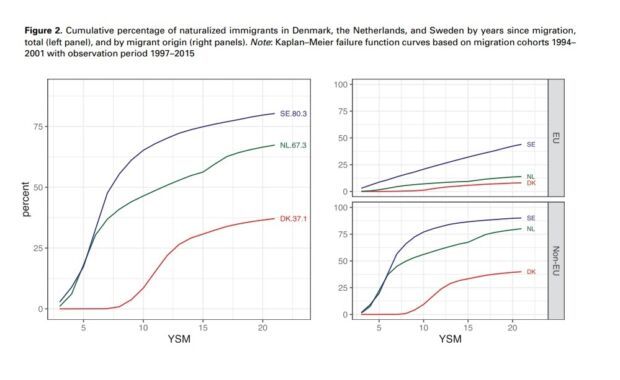
“After two decades in the destination country, cumulative naturalization rates vary remarkably with over 80 per cent of migrants in Sweden, two-thirds in the Netherlands, and only around a third in Denmark having acquired citizenship,” write the authors.
The research reveals that strict citizenship policy is the cause of low integration in Denmark – not lifestyle or financial reasons.
‘Language requirements and integration tests’ are especially detrimental: “we observe lower naturalization for migrants after language requirements and integration tests were introduced in Denmark and the Netherlands,” write the authors.
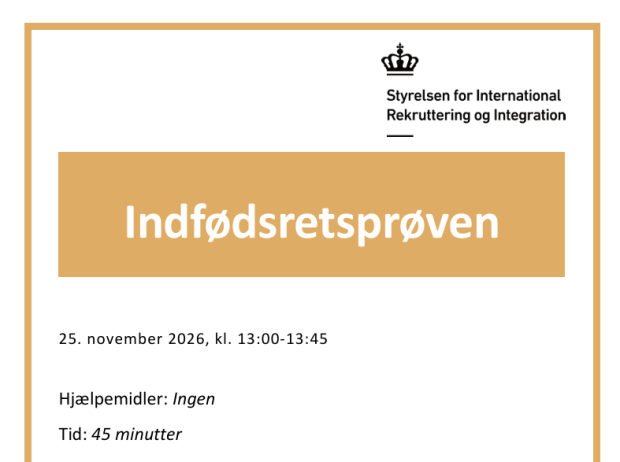
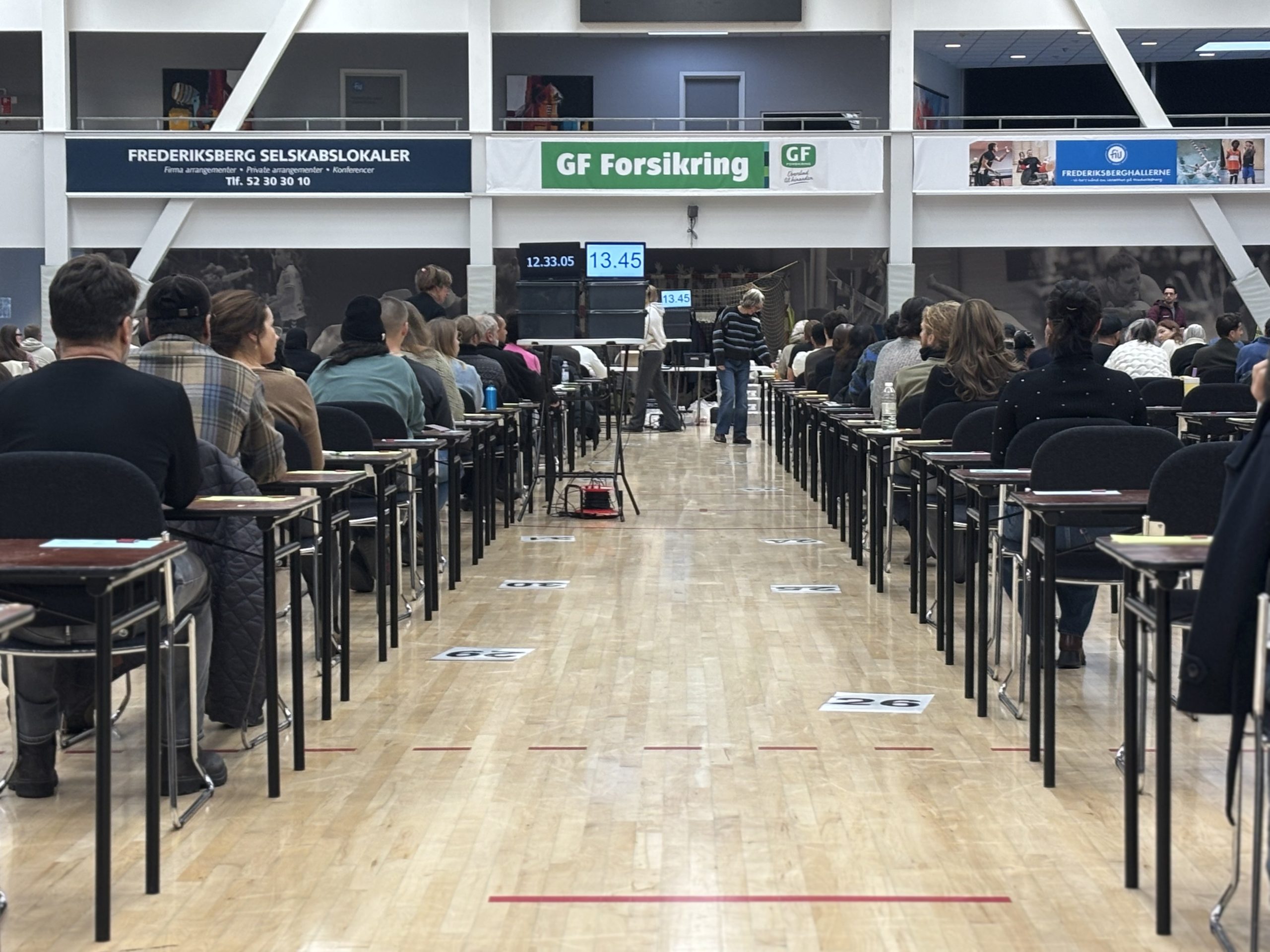
In Denmark, these tests and requirements apply not only to citizenship, but to work and residence permits.
Based on this research, Moderaterne’s fast-track could not only bring skilled professionals into Denmark faster, but have a direct positive impact on their sense of belonging for decades after the permit is granted.
The fast-track is a good idea – but not for the reasons Moderaterne think
In Danish politics, integration policy may see poor results because it is treated as an isolated legislative field that does not intersect with work and residence policy.
However, the argument can be made that every policy that affects international people is a matter of integration policy. Viewed through this lens, integration policy is not a narrow field, but an umbrella term.
However, the politicisation of integration policy in Denmark makes parties reluctant to consider the crossover. Even Moderaterne, while pushing for more migrants with the fast-track proposal, avoid doing so:
“It’s important to separate integration and labour market policy. They are two different, incomparable areas,” says Rona.
“This is crucial because in Denmark integration policy has been a battleground for election campaigns. The labour market has, separately, been under pressure in Denmark for many years. I hope this measure can do something about it.”
What this perspective might miss is that the fast-track is a good suggestion, but not because it is faster – but because it’s because it is kinder.
A core belief of the traditional Nordic model of governance, which prioritises a strong welfare state, is that when state is kind to and provides for its people, they feel a greater sense of belonging. The fast-track is therefore not just a workforce solution, it’s a broader integration solution.
Danish workplaces need to do more
If Danish businesses want happy skilled workers in long-term roles, they have to take an interest in their employees’ lives outside the workplace.
Denmark frequently ranks low in studies on the ease of making friends. So, if a fast-track brings 90-100,000 newcomers, how can we make them feel at home?
“I have heard about those findings before. It’s difficult to see that when you’re raised here in Denmark. We’re friendly, but hard to make friends with. It won’t change overnight,” says Rona.
He acknowledges social integration as a key part of worker experience: “I had a chat with two students in Aalborg and they said if they could spend more of their spare time with Danish friends, they could more easily enter the culture.”
“I think the key to integrating new international students and workers is to invite them into our spare time.”
A fast-track to happy internationals
The understanding does seem to be growing amongst Danish politicians, that work policy and integration policy have crucial areas of overlap.
Rona makes the classic case for working in Denmark: “there is something unique about Denmark. We have a high level of job security, good working conditions, a great work-life balance, culture, flexibility – and the Danish model of leadership where having lunch with the CEO is normal, even in big companies.”
But neither he, nor any other politician, can claim that Denmark is friendly. So, could a friendly work-permit system be the beginning of a more broadly welcoming Danish society?
Mounting research says yes. With initiatives like the fast-track, perhaps Denmark won’t rank so low on social-life surveys in 2030.