Do you know how much it can cost to work in Denmark? Thousands upon thousands of kroner. More than 20,000 to be precise, if bureaucracy meets a bit of bad luck. The result is that you can spend a month’s wage just to get back the money you needed to be admitted into the “club” of workers and taxpayers.
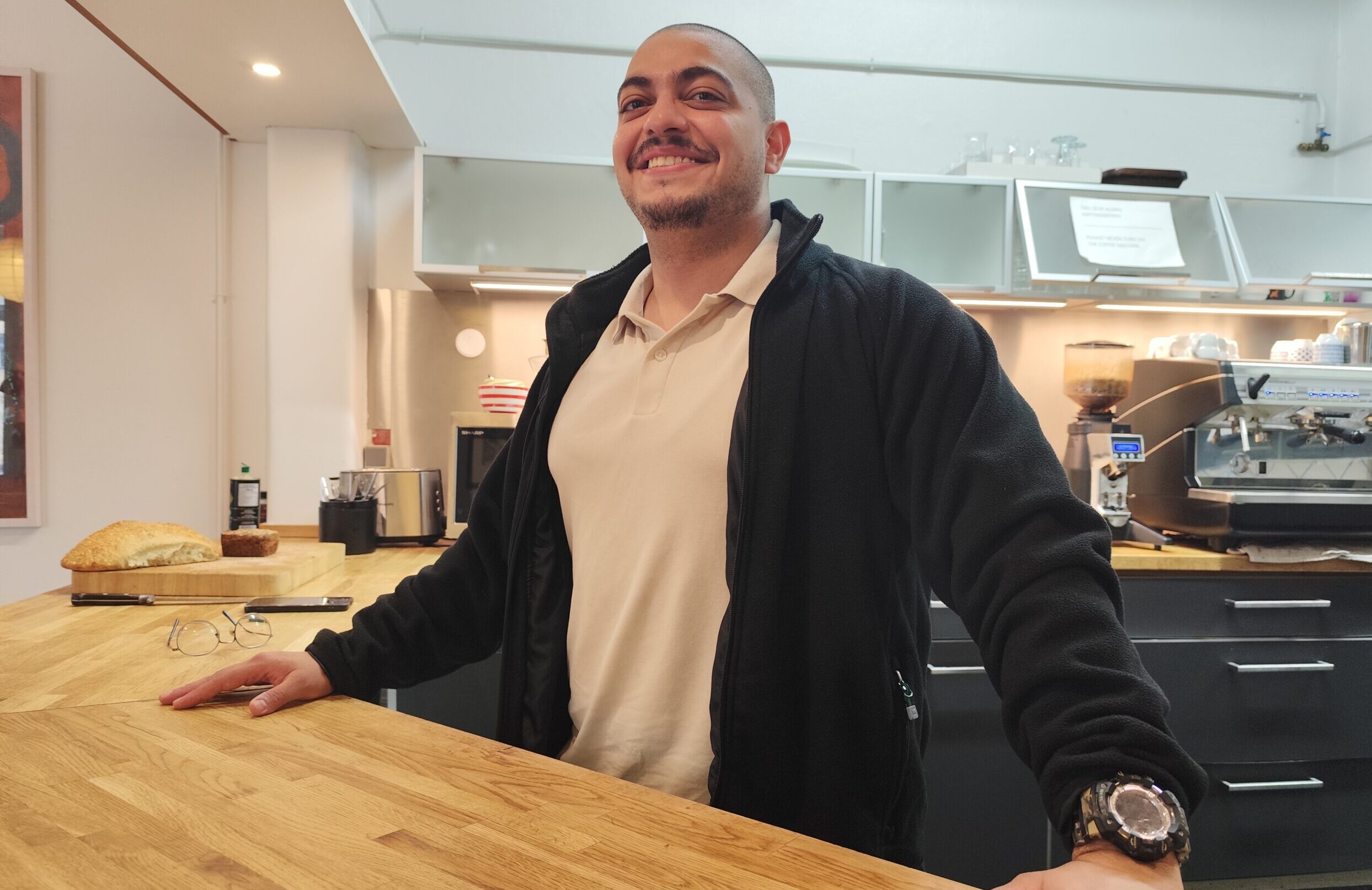
And this is the story of Mosa, who has travelled and worked all over Europe in the finest restaurants, but in Denmark, and only here, clashed with (almost) insurmountable rules.
Before you move on reading, if you are not a non-EU citizen you need to know something about how work-related visas function in Denmark.
In Denmark, non-EU citizens on a work permit are tied to a specific employer and job. If they change jobs, they must apply for a new residence and work permit before starting, even if they already live in Denmark. Each new application requires paying a fee of 6,055 DKK (as of 2025), and the process is handled by SIRI. The application is not guaranteed to be approved, meaning workers risk paying the fee multiple times if a workplace closes or if an employer does not meet the legal requirements.
A journey across Europe
Mosa El Sharif, 28, left Jordan when he was 16. He spent seven and a half years in Turkey, where he studied gastronomy and began working in kitchens. Later he joined Erasmus and lived in Berlin and Munich. Then came Portugal, where he worked in a Michelin-starred restaurant.
“I have lived all over Europe, I have studied, I have worked, and I have shown in every possible way that I am not a person who causes trouble,” he said. “I have ten years abroad and certificates. But I have never seen such a strict system as the one in Denmark.”
The first fee
From Portugal he applied for a position in a restaurant in Farum.
“Everything went smoothly. I was hired, I moved a couple of months later, and I was already learning the language before coming,” he said.
He applied under the Positive List scheme and paid 6,000 DKK for the visa. But after just one and a half months, the owner closed the restaurant.
“I had the visa but not yet residency because there was not enough time,” he said. “When the restaurant closed, I had to inform SIRI. I immediately started sending other applications.”
The second fee
One of those applications led to a Michelin restaurant at Kongens Nytorv in Copenhagen.
“They wanted me to work. I paid again 6,000 DKK, because you have to pay every time you apply for a new job under this scheme. And there is no guarantee you get it,” he said.
Together with the owner, he sent the documents to SIRI. They waited until December 20 for an answer.
“SIRI said that this restaurant did not meet the education obligation,” he explained. In Denmark, every restaurant that hires a non-EU worker via the Positive List must pay into an education fund, a rule called udannelsesforpligtelse. “We sent more documents, but in February the application was rejected. I lost my job again.”
The third fee
Still determined, he applied again.
“Six restaurants told me they were interested in hiring me, but none of them fulfilled the education obligation,” he said.
He eventually found a seasonal job in Klampenborg.
“I paid 6,000 kroner for the third time. The contract was from April to September, but I had to say no,” he said.
The fourth fee
Next came another restaurant, this time in North Sjælland, where he still works today.
“I paid another 6,000 kroner,” he said. “The owner helped me with everything. But the restaurant didn’t fulfill the education obligation either, so we used another scheme outside the Positive List. That scheme requires a higher salary.”
He started there in April. But the difficulties were not over.
“In June, we got another letter,” he said. “They wanted to verify if the owner could afford to pay my salary. They asked for more requirements and wanted to check that neither me nor the owner had unpaid bills.”
Residency, at last
Eventually, he received residency.
“I can stay here now,” he said. “But if the restaurant fires me or closes, the residence permit is at risk. The restaurant is on sale because the owner is 75. The permit literally says: ‘har kun ret til at arbejde som kok hos […]’– I only have the right to work as a chef at that restaurant.”
After years of moving across Europe and surviving on his savings in Denmark, he feels the system is too rigid.
“It is almost insane,” he said. “Why can the application not be valid for more than one job? It is absurd and unnecessary. Employers want chefs. Restaurants can close if one chef is sick for 10 days, and yet motivated people face obstacles. We could make the process much easier, with rules that give better results. Why must existence in Denmark be tied to just one employer?”
Others share his concern.
“We should look at models from other countries,” said David, from Community House, an organization that helps internationals, and has followed Mosa’s case. “It would help a lot to retain people. People have the right not to live in limbo. This way we damage people’s lives and overcomplicate something that Denmark actually needs.”
For Mosa, the conclusion is simple.
“Any restaurant wants chefs, and many are willing to go far to find them,” he said. “But the system makes it almost impossible for us.”