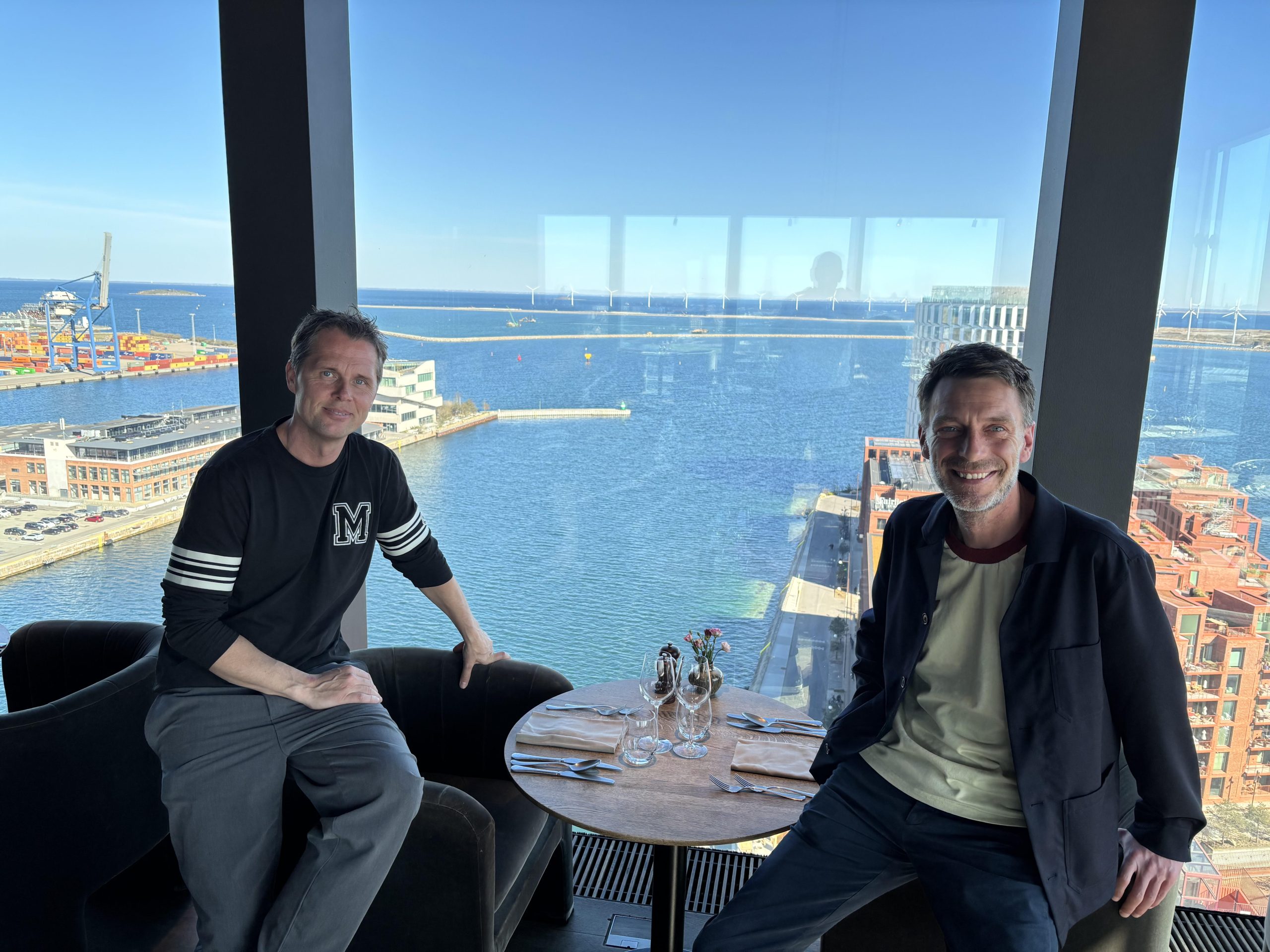
The entrance is modest, leading you into an elevator where there is really only one floor to press: the 17th floor.
When you arrive and step out, it is truly: Wow!
Silo gives you a 360-degree panoramic view of Nordhavn, Copenhagen Harbour, and, on a clear day, most of Copenhagen.
You can follow the rapid development taking place in one of Copenhagen’s largest boom areas: Nordhavn, and a calming view of the Øresund strait and the construction of the artificial island, Lynetteholm.
“Everyone is captivated by the view in ‘Siloen’ (the nickname for Restaurant Silo), yet in the kitchen, we have to think as if we are located on the ground floor. A beautiful view does not create good food; that is made regardless of which floor you are on. The expectations our guests have because of the view must be reflected in the food we serve,” says new Co-Director at Silo, Lau Richter.
He and the other Co-Director, Michael Rønnebæk-Rørth, has been friends for many years. Still, this is the first time the two of them are leading a restaurant together in Copenhagen.
Owner and leadership
Lau Richter and Michael Rønnebæk-Rørth form the new leadership constellation at Restaurant Silo. Michael Rønnebæk-Rørth took over the management of Silo in 2024. The two men have known each other for almost 30 years, after they met at Carlton on Halmtorvet in the late 1990s, and they have long talked about starting a business together.
- Michael Rønnebæk-Rørth: Has been a waiter and restaurateur in Copenhagen since the 1990s and has created success with Silo in Nordhavn with an internationally focused concept.
- Lau Richter: Came from a position as General Manager at Restaurant Barr, where he had been for seven years. Before this, he held several roles, including restaurant manager, at Noma during the period 2004 to 2018.
“We have agreed that it is okay for us to disagree—but not to fall out. We have different approaches to leadership and implementation. For me, there isn’t a long distance from thought to action; Lau is more deliberate about laying out a strategy and ensuring we execute it,” says Michael Rønnebæk-Rørth.
Come by for the view
Several times during our conversation, they emphasize the importance of being inclusive. Yes, the ambition to serve high-quality food, wine, and drinks is clear – but you can also visit Silo for a cup of coffee or just “look up” for a breather.
The place is for inclusion, so stop by, even if you are not planning a major dinner investment.
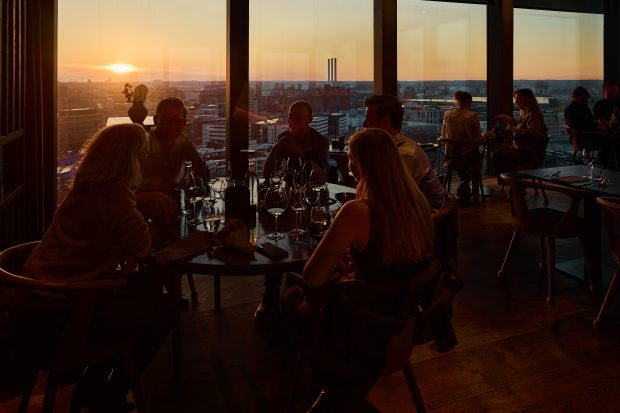
International guests are the rule by now.
“I would say we have 200 percent more international guests than a year and a half ago. When you walk around – also because we have more internationals employed – you will hear English just as often as Danish at Silo,” says Michael Rønnebæk-Rørth.
This development reflects city life in Copenhagen in general, and Nordhavn in particular, a city district home to a particularly large number of internationals.
A visit to Silo is meant to be a must, whether you come as a tourist or are looking for a special Copenhagen experience.
Lau Richter calls the development of gastronomic experiences in Copenhagen over the last 10-15 years “pretty insane.”
“Many restaurants – but actually also cafes – have been and still are driven by innovation and a personal approach to cooking. In addition to the Copenhagen food scene being driven by skilled and ambitious gastronomes, there has been a huge boost in the quality of and approach to ingredients,” says Lau Richter.
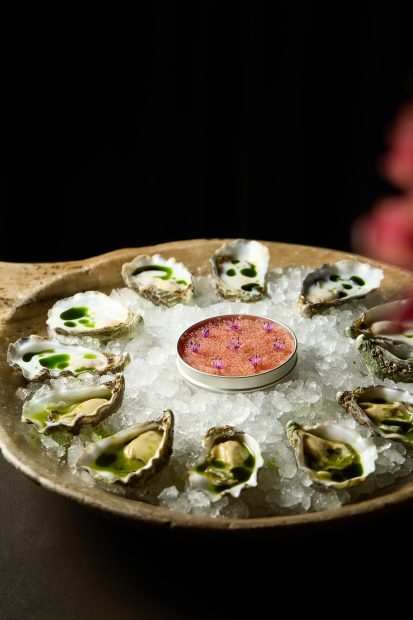
Silo follows this approach, aiming for guests to feel comfortable and experience high-level quality.
Take the lunch menu, for example. It represents a host of Danish smørrebrød (open-faced sandwiches) combined with tasty beer from the Danish brewery Fur.
The History of Danish Smørrebrød
The classic high-piled smørrebrød (open-faced sandwich) originated in the Danish bourgeois kitchen during the latter half of the 19th century, featuring toppings like roast pork with red cabbage, prunes and apples, as well as liver pâté with pickled beetroot or cucumbers.
In recent decades, creative chefs have developed smørrebrød into modern gastronomy. For many Danes, it is recognizable, traditional, and evokes memories of their childhood.
At Silo, they bake their own rye bread using their own recipe. The selection of smørrebrød changes according to the season, although some classics remain on the menu.
“We use the same principles as they did in the old days. This means that the flavor profile must contain something sweet, something sour, and something salty. This creates contrasts and, together, a rich taste experience,” says Lisa Premika Gudberg Ballisager, chef at Silo.
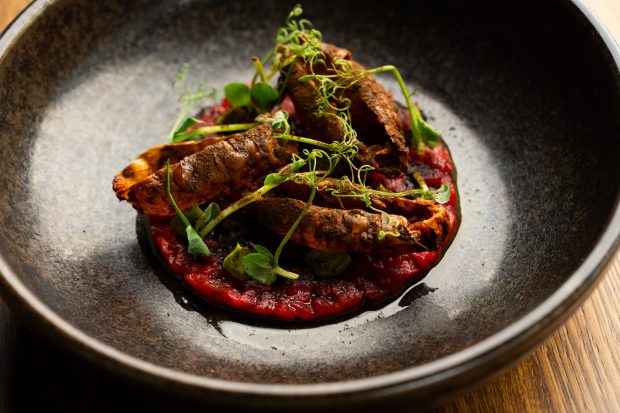
An example is Marinated Herring with sugared rhubarb. A classic Danish dish where the rhubarb, which has been in sugar syrup for 24 hours, meets the acidity from the salted and pickled herring.
The most popular smørrebrød at Silo is Crispy Fried Plaice with Greenland Shrimp and dill mayonnaise. Both Danish and international guests favor it.
“We serve it with homemade dill mayo, but you can also choose the Danish classic remoulade, for which we make our own pickles, a central ingredient in remoulade. Some international guests opt out of the rye bread and get white bread instead—or eat it completely without bread,” says Lisa Premika Gudberg Ballisager.
Her personal favorite is a piece with veal tongue, creamy mushrooms, and sweetbreads.
“We bring in the cured veal tongue, boil the meat until it is tender, slice it, fry the mushrooms, and add mustard, cream, and herbs. That creates the creamy mushrooms. The sweetbreads are poached, then fried off with herbs and butter. It’s truly delicious, and I love it,” says Lisa Premika Gudberg Ballisager.
Sources: The National Encyclopedia of Denmark and Lisa Premika Gudberg Ballisager, chef at Silo.
“There must be recognition in the taste experience, and a guest should feel safe. At the same time, you encounter Danish food culture at a high level, and we can see that there is still an audience for the classics on the menu,” says Michael Rønnebæk-Rørth.
The same applies to the evening menu, which offers familiar dishes without compromising on quality. Rørth notes that Danes are particularly concerned with “value for money.
”Specifically, when it comes to buying wine. An item many experience as very expensive when dining out. “We want to challenge that a bit. At Silo, you can get a good bottle from well-known districts and suppliers, but you can also enjoy it without feeling like it drains your finances,” says Michael Rønnebæk-Rørth.
Silo
Silo is located on the 17th floor of the award-winning building “The Silo” in Nordhavn, Copenhagen. The building itself was originally a 17-story grain silo, which was transformed by the architectural firm COBE.
Silo is a former grain silo located in Nordhavn, Copenhagen, which houses 39 apartments, as well as a restaurant and viewing platform spread over 17 floors, established in 2017. The Silo’s facade consists of galvanized steel. In September 2018, The Silo was awarded the Renoverprisen (Renovation Award) for the best renovation project.
Menu, booking, and more info at https://silocph.dk/contemporary-nordic-dining-on-the-17th-floor-in-nordhavn/
The event and striking view can also involve a visit to the bar. The bar is led by Nicklas Jørgensen, who has won the World Championship for bartender teams and worked at the critically acclaimed Helium as well as Deco Bar.
Friday and Saturday, renowned DJs deliver atmospheric soundscapes in the bar area on the 17th floor.