If a company wants to employ an international worker, the company only needs to be covered by a nationwide collective agreement with trade union representatives.
Danish companies could thus fast track hires, without having to wait for the slow approval of SIRI (The Board for International Recruitment and Integration).
International job applicants would get into the workplace faster, with less bureaucracy.
That’s the proposal floated by Moderaterne on Tuesday. The proposal has not been cleared in advance with the government Socialdemokratiet, which historically is very keen on maintaining orderly conditions in the labor market due to deep roots in the trade union movement.
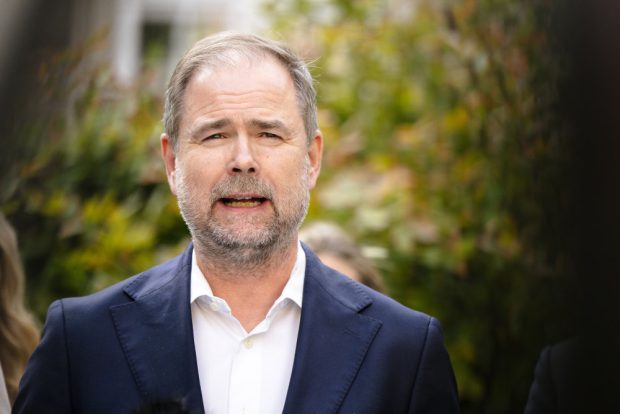
“This proposal should speak directly to the heart of a good social democrat, because it is a great tribute to the Danish model. It is a boost to the Danish trade union movement at a time when, in some places, it is difficult to make the trade union movement attractive,” says Moderaterne leader and foreign minister Lars Løkke Rasmussen.
Likely to be implemented
Moderaterne is a new party led by the experienced Lars Løkke Rasmussen who, as chairman of Venstre, has been prime minister twice.
The initiative will aid Danish companies in hiring. It will be difficult for Socialdemokratiet and the trade union movement to reject because it aligns with their core beliefs: work in Denmark must be carried out on orderly terms, regardless of the nationality of the person carrying out the work.
Positive response
The chairman of Denmark’s largest trade union 3F, Henning Overgaard, also welcomes the proposal.
“I have been vocal about this for a very long time,” says Henning Overgaard. He adds that companies must pay an average wage and not just a minimum wage to international workers, even if the pay is within applicable collective agreements.
“If you take advantage of foreign workers by paying them only the minimum rate of of a wage agreement, and thus below the average payment for the profession, then it is exploitation. I will continue to draw attention to that, to make sure Moderaterne are aware of it,” says Overgaard to Politiken
Various employers’ organizations have praised the proposal. The initial response from Venstre and Socialdemokratiet is also welcoming, though no direct action has been taken yet.
Explaining the Danish Model
In Denmark, the Danish labour market model is often referred to as the Danish model.
The Danish labour market model assumes that employers and workers are organized in strong associations and unions that represent the broad interests of members in collective agreement negotiations.
A prerequisite of the model is that the partners are held accountable in relation to the agreements made.
Regarding collective agreements
In the Danish labor market, pay and working hours are primarily regulated by collective agreement or individual employment contracts. There is no statutory minimum wage in Denmark.
As far as possible, the state refrains from intervening in the regulation of pay and working conditions as long as the employers, employees or unions are able to resolve issues in a responsible manner.
Source: Workplace Denmark