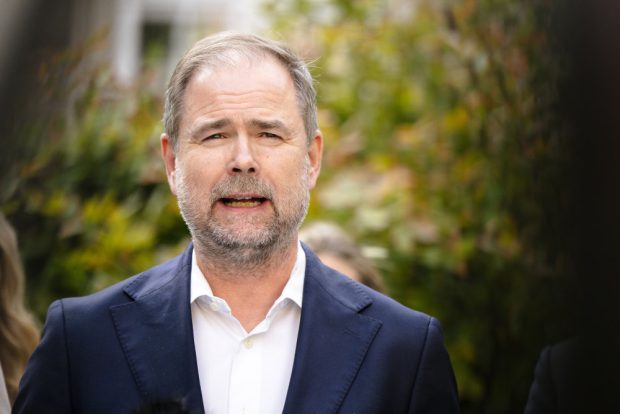
Minister for Economic Affairs Stephanie Lose of Venstre, on Thursday, presented the government’s economic report and highlighted how much extra income an average Danish family can expect next year.
After tax, a typical blue-collar household will have around DKK 15,000 more annually due to negotiated wage increases.
On top of that, political agreements struck by the government will give a similar family an additional DKK 15,000 a year through lower excise duties on goods such as sweets and chocolate, a reduced electricity tax, lower daycare fees, and general tax cuts.
Battle of truths
“That means double the extra disposable income — roughly DKK 30,000 for a family — even after taking into account that grocery shopping has become more expensive,” Lose said at the press conference, according to DR.
Lose faces what may be the government’s most critical task ahead of the 2026 general election: convincing voters that the Danish economy and labour market remain strong.
Many Danes, like citizens across Europe, feel that the cost of food and services just keeps rising.
On Thursday, the Copenhagen Post reported that Denmark’s alignment with EU tax rulings will end several VAT exemptions, raising the cost of cultural, educational, and recreational activities nationwide.
Lose’s broader mission is to underline that Denmark remains resilient despite global economic turbulence — including Russia’s war in Ukraine and ongoing trade frictions with the United States.
The minister warned that the US continues to impose high tariffs and has introduced new duties on several countries this year. Danish companies have been hit hard, including Novo Nordisk and others that have already had to lay off staff.
Even so, employment continues to reach new records.
Seniors are working up
In Denmark, this growth is fuelled by seniors who remain in the workforce and internationals who move to the country for work.
“It’s a very positive development. I’m pleased that experienced employees show every day that they are needed in the Danish labour market,” Lose said.
Key Figures
Here are the government’s forecasts for 2026:
• GDP growth is expected to ease from 2.6 percent in 2025 to 2.2 percent in 2026.
• Private consumption is projected to rise from 1.9 percent this year to 2.2 percent next year.
• Wage growth in the private sector is expected to slow from 3.7 percent to 3.2 percent.
• Inflation is forecast to be halved, from 1.9 percent this year to 1.0 percent in 2026.
• Housing prices, which rose 5.3 percent this year, are expected to increase by 3.7 percent next year.
Source: Economic Outlook (Økonomisk Redegørelse)
The macroeconomic numbers remain strong – not least the expectation of just 1 percent inflation in 2026.
Lose is well aware that voters ultimately judge the government by whether life becomes more affordable.
This is why the government’s upcoming VAT and tax reductions, which will not take effect until 2026, are politically crucial.
A lower electricity tax, for example, will help moderate inflation.
At the press conference, the minister said that for technical reasons the government does not consider it feasible to cut VAT on food before the general election, which must be held no later than autumn 2026.